


Archaeological delimitation
Prior to any urban development activity, work is carried out to delineate areas of archaeological expectation. The aim of delineation is to confirm or exclude the presence of archaeological remains in the subsoil (i.e. areas of archaeological or palaeontological expectation), as well as to obtain preliminary information about a site, its stratigraphy or chronology.
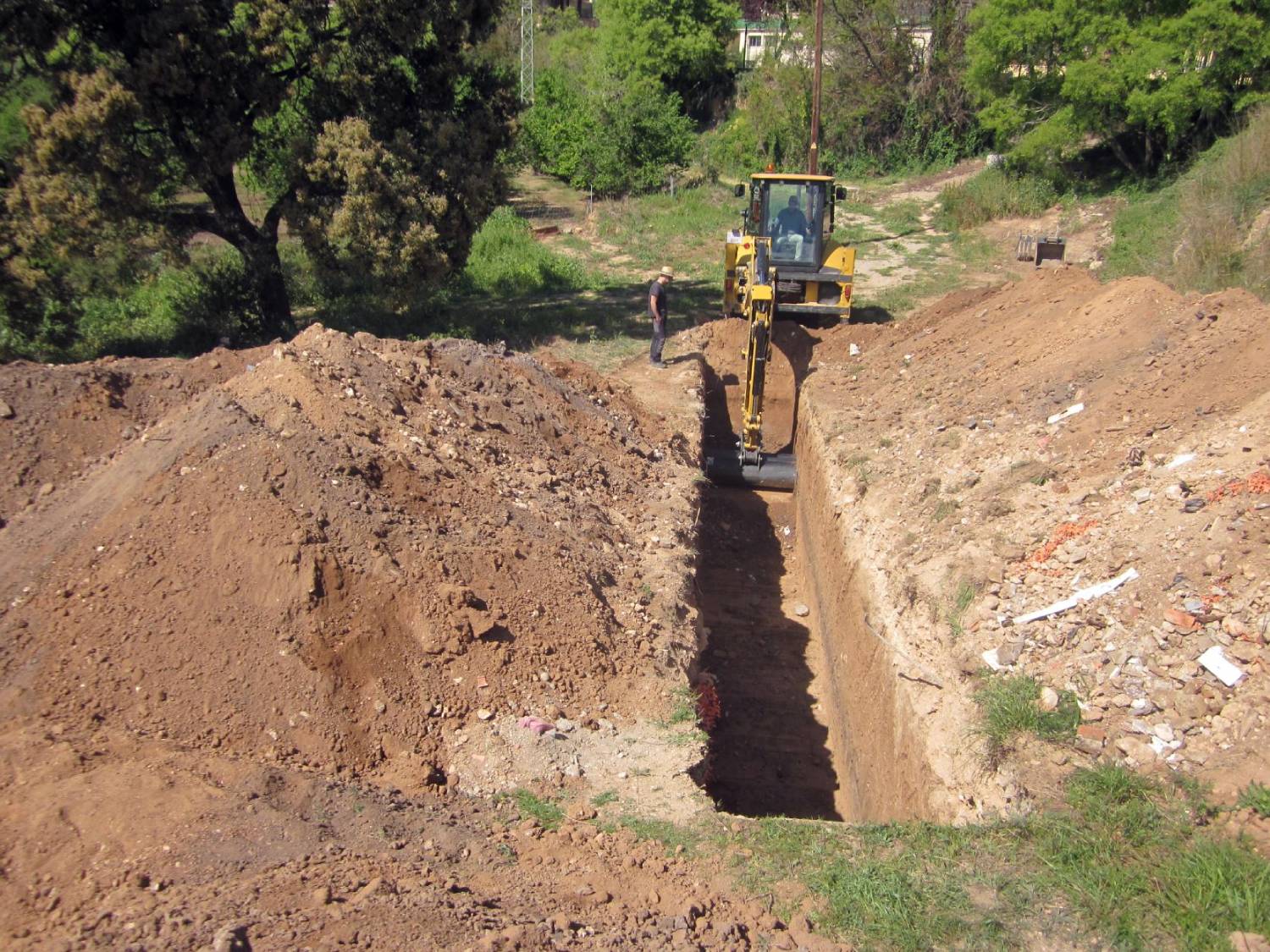
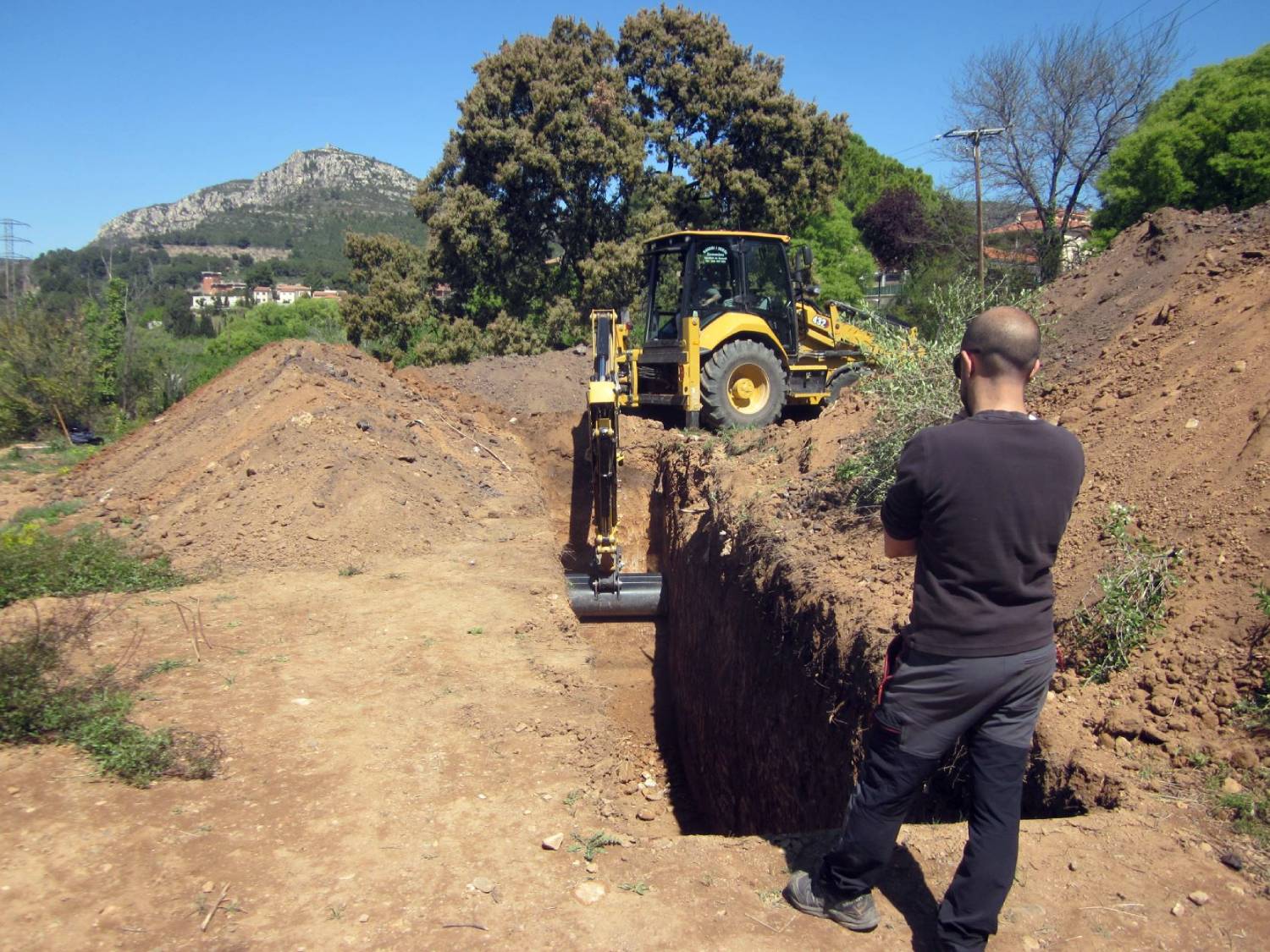
The purpose of trenching is to visualise the subsoil in order to locate archaeological remains. If no archaeological remains are found, the geological terrain must be excavated to ensure that there are no archaeological remains where the trench or gully passes. This involves the use of machinery to remove the topsoil. It is necessary to cut the ground to the location of the archaeological remains or to the discovery of the geological terrain if no archaeological remains are documented.
Development of the work
The work may be carried out by the excavation of phases or boreholes distributed over the area to be investigated, or by the extensive excavation of the entire surface. If it is carried out by means of boreholes, they shall be distributed over the whole area to be investigated in such a way that they are representative. For small areas or inside buildings or urban areas, boreholes of about 2 metres wide and 2 metres deep are normally used. For larger areas, larger boreholes are preferable. These boreholes should be designed to cover as much space as possible in all directions. Phases of approximately 10 metres in length and 10 metres apart are required. Where there are clear indications or archaeological remains, boreholes should be drilled at shorter intervals to define the site.
Machinery and prospecting
The machine normally used is a backhoe excavator with a flat bucket for clearing. However, in certain cases, such as when the geological terrain is very deep or the soil is extremely compacted, it is possible to use a larger machine, namely a backhoe with a flat bucket. Prospecting using boreholes is a useful method for discovering archaeological sites. It is a more efficient survey than surface survey because it provides much more accurate information. If evidence of archaeological remains is found, it will be necessary to define the extent of the site and establish its typology. With this information it will be necessary to make a proposal for future work, both technically, temporally and economically.
Archaeological delimitation by drilling boreholes or probes
We can also carry out manual archaeological surveys. This is a type of action that serves to know, before excavating a site, its stratigraphy, power and chronology. For this purpose, a sufficient number of excavations are programmed in order to evaluate the entire archaeological site. This action requires the presence of at least one archaeologist and one or more assistants, depending on the number of excavations and the specific characteristics of the site. It is also necessary to provide for the presence of a survey team to locate the manual soundings.



In order to centrally manage the preventive requirements requested by our clients, we have the Gestiona seal, with which Obralia, a neutral agent, validates that all processes are correct and up to date, contributing to a more satisfactory user experience for our clients.